Ferrari’s First EV is a Disappointment – Here’s Why the Luce Failed to Ignite Passion
What happens when a 70-year-old icon of speed and luxury tries to reinvent itself in the electric age? Ferrari’s Luce EV debut has sparked outrage, confusion, and an 8% drop in stock prices— but is this the future or a fatal misstep?
The Shocking Design That Broke Ferrari Fans' Hearts
 Source: sundayguardianlive.com
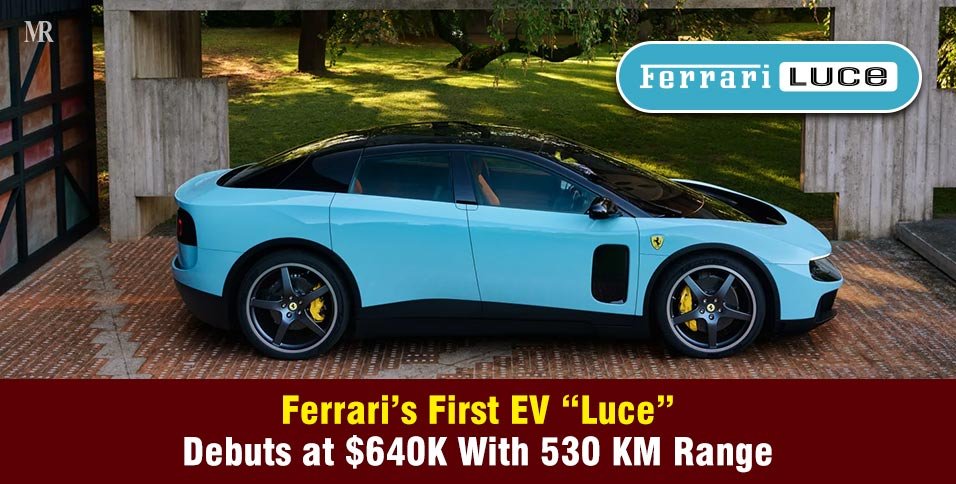
For decades, Ferrari’s identity has been etched in the curves of its sports cars—aggressive grilles, low-slung bodies, and the unmistakable roar of a V12 engine. But the Luce, designed by Jony Ive, is a different beast altogether. It looks less like a Ferrari and more like a futuristic saloon car that accidentally wandered into a supercar dealership.
The emotional divide is stark. To some, it’s a betrayal of everything Ferrari stands for. Italy’s Deputy Prime Minister Matteo Salvini called it “outrageously expensive” and “anything but a car from the Prancing Horse,” echoing the sentiment of longtime enthusiasts who see the Luce as a dilution of Ferrari’s DNA. These critics aren’t just nitpicking—they’re mourning a cultural icon’s departure from its roots.
Yet, for others, the Luce is a bold reinvention. “When you have new technology, the design must be different,” argues Benedetto Vigna, Ferrari’s CEO. The car’s smooth, convex surfaces and minimalist aesthetic are meant to prioritize function and innovation over form. But here’s the rub: Ferrari’s fans didn’t just want a car; they wanted a symbol. And the Luce feels like a luxury minivan in disguise.
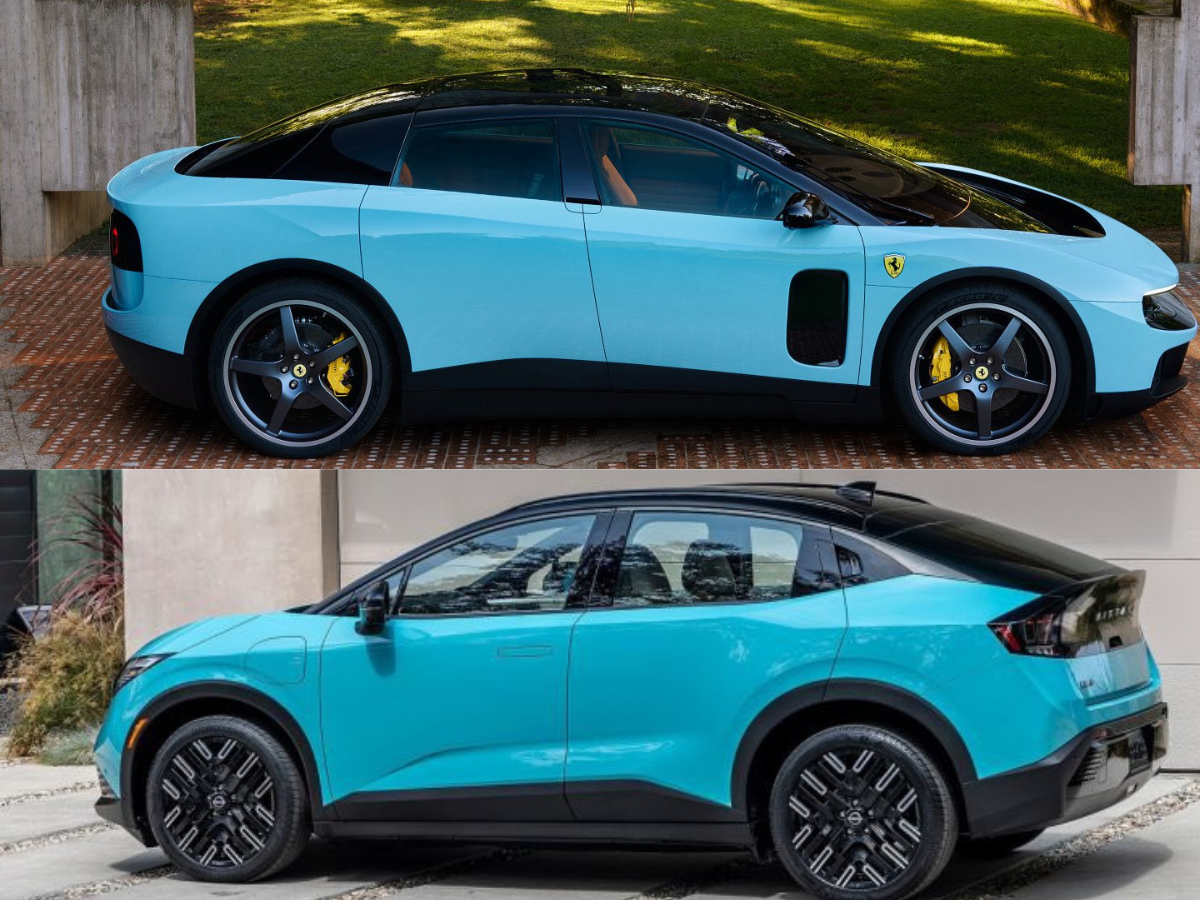
The backlash isn’t just aesthetic—it’s existential. Critics have drawn comparisons that feel like memes gone viral. One Twitter user joked that the Luce and the Nissan Leaf “look identical” if you strip away the logos. While the Leaf is a $35,000 commuter car, the Luce is priced at $640,000—a staggering 18 times more expensive. The irony? The Luce’s design mirrors the Leaf’s utilitarian shape.
But let’s not forget the specs. With 1,035 horsepower, it can sprint from 0 to 60 mph in 2.5 seconds and hit a top speed of over 190 mph. Inside, it’s a blend of old-world craftsmanship and cutting-edge tech: a steering wheel made from recycled aluminum, physical buttons alongside Samsung OLED screens, and a suspension system that adjusts in real time.
The financial markets have taken notice. After the Luce’s debut, Ferrari’s share price dropped by as much as 8%, signaling investor uncertainty. Analysts like Pierre-Olivier Essig of AIR Capital called it a “mix between a Honda Accord EV and a Tesla,” a backhanded compliment that underscores the Luce’s polarizing appeal.
At its heart, the Luce is a clash between tradition and innovation—a battle between the roar of a V12 and the silence of an electric motor. For Ferrari, the question isn’t just whether the Luce will sell. It’s whether the brand can reconcile its past with its future without losing the soul that made it a legend.
Investor Panic: How Ferrari’s Stock Plummeted After the Luce Launch
Ferrari’s first electric vehicle, the Luce, arrived like a bold gamble in a high-stakes poker game. When it debuted, investors folded. Shares tumbled 8% in Milan within hours, a gut punch for a company valued at €56 billion.
The Luce’s design, minimalist and glass-heavy, sparked comparisons that felt less like praise and more like a punchline. One analyst called it “a mix between a Honda Accord EV and a Tesla,” a quip that went viral faster than a Formula One pit stop.
For a brand built on sharp lines, roaring engines, and the primal thrill of a V12, the Luce felt like a misstep. Its bulbous, high-roof silhouette—crafted by Jony Ive’s LoveFrom studio—looked less like a Ferrari and more like a sleek, overpriced commuter vehicle.
The financial stakes were dramatic. Luxury EVs are a niche market, and the Luce’s starting price of $640,000 put it in a category where demand is rare. Analysts warned that high R&D costs and weaker residual values for EVs could squeeze margins, turning the Luce into a cash-burning experiment.
The heritage debate was a clash between tradition and transformation. Italy’s Transport Minister Matteo Salvini called the Luce “outrageously expensive” and “anything but a car from the Prancing Horse,” a jab that stung purists who see EVs as antithetical to Ferrari’s soul.
Yet Ferrari’s CEO, Benedetto Vigna, stood firm, arguing that the Luce was a necessary evolution. But courage doesn’t always translate to profit. The Luce’s target audience—super-wealthy families, not die-hard petrolheads—was a gamble.
The stock market’s reaction was clear: skepticism. Shares fell 6% in Milan, and the broader market seemed to ask, “Why?” Ferrari’s 2030 plan—a 20% fully electric lineup—now felt like a distant dream.
The Luce isn’t just a car. It’s a mirror reflecting Ferrari’s struggle to redefine itself in a world changing faster than even iconic brands can keep up.
A New Ferrari for a New Era? Targeting Wealthy Families Over Enthusiasts
Ferrari’s latest move feels like a family reunion gone rogue. The Luce, its first fully electric vehicle, is a five-seater with four doors—a design so un-Ferrari it’s sparked debates in boardrooms and online forums.
Priced at $640,000, the Luce isn’t for average enthusiasts but ultra-wealthy families who want to park their kids, a butler, and a mini-fridge in a vehicle that still screams “Ferrari.” The design, helmed by Apple’s former design guru Jony Ive, is all clean lines and glassy surfaces—a far cry from the aggressive curves that have defined the brand for generations.
Critics have called it a “mix between a Honda Accord and a Tesla,” a comparison less of a compliment than a punch to the gut for purists. But Ferrari isn’t just chasing the EV trend; it’s trying to redefine it. The Luce’s engineers boast a 1,000-horsepower quad-motor setup, a 329-mile range, and a 0-60 mph time that would make even seasoned petrolheads blush.
Yet the car’s soul seems to be in its utility—think of it as the Tesla Model S with a Ferrari badge and a third-row seat. The question is, does that make it a luxury icon or a missed opportunity?
The brand’s pivot is bold but baffling. For years, Ferrari’s allure was tied to the visceral thrill of a V12 engine’s growl. Now, it’s targeting buyers who care more about status than speed.
Rivals like Porsche and Lamborghini aren’t waiting. The Taycan has carved a niche in the luxury EV market, while Lamborghini scrapped its EV plans, citing weak demand. Ferrari’s challenge isn’t just building a car—it’s convincing the world that this is the future of the Prancing Horse.
The backlash has been swift. Italian Deputy Prime Minister Matteo Salvini called the Luce “outrageously expensive” and a betrayal of Ferrari’s heritage. Even the Pope, during a private viewing, quipped, “Is this the first four-door Ferrari?” John Elkann, Ferrari’s president, replied, “The first five-seater,” a line that feels less like a triumph than a concession.
Ferrari’s CEO insists the Luce is a necessary evolution. But for many, it feels like a step too far—a car that’s more “Ferrari for the future” than “Ferrari reimagined.”
The market’s reaction has been mixed. Ferrari’s shares dropped 6% after the Luce’s debut, signaling investor skepticism. Analysts called its strategy “lost in translation,” while others see it as a bold gamble.
In the end, the Luce is a mirror held up to Ferrari’s future. Whether it becomes a landmark or a cautionary tale depends on one thing: can Ferrari make the world believe that a five-seater with four doors is still worthy of the Prancing Horse?
Conclusion
Ferrari’s Luce is a bold but controversial step—a symbol of both ambition and identity crisis in the EV era.
Will Ferrari’s next move reconcile its storied past with the electric future, or has the Luce marked the end of an era?
References
- Ferrari shares fall after launch of first EV as Jony Ive... | The Guardian
- Ferrari Luce vs Nissan Leaf: Expensive Italian Copy of Japanese EV?
- Ferrari announces Luce, its new $640,000 EV designed by Jony Ive...
- Ferrari Shares Plunge After Analyst Slams New EV As... | ZeroHedge
- Ferrari First EV Luce Debuts at $640K With 530 KM Range